AI and Automation Redefining Steel Service Center Operations in 2026
Why It Matters for Steel Warehouse
Steel Warehouse's competitive positioning in the next 5 years will be materially affected by how aggressively it adopts automation and AI relative to larger, better-capitalized competitors like Ryerson-Olympic (RYZ) and Worthington Steel. The 16-location network creates both opportunity (scale for AI investment ROI) and complexity (multi-site data integration). Specific near-term opportunities: predictive blade maintenance on slitting lines (high ROI, relatively low implementation cost), computer vision surface inspection for laser-quality flatness products (directly serves SW's high-quality surface positioning), and AI-assisted coil inventory positioning across the distribution network. Lock Joint Tube's tube mills are candidates for vibration-based predictive maintenance on roll-forming equipment.First reported: 2026-03-08 Section: F — Technology & Automation
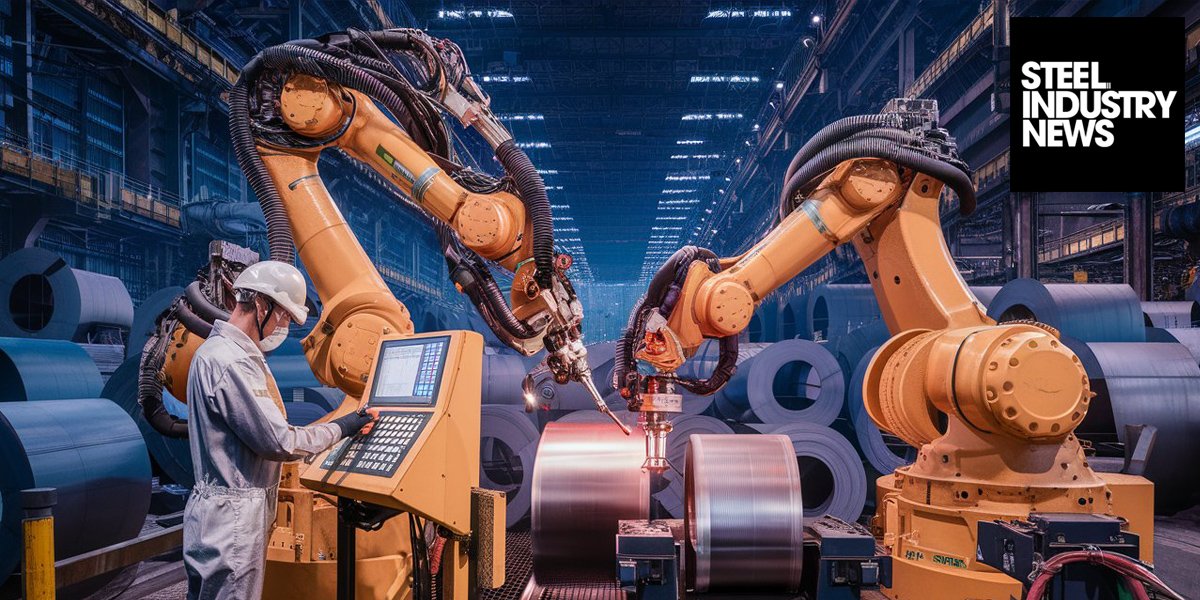
The steel service center industry is undergoing accelerating digital transformation in 2026. Automation, AI-powered quality inspection, digital twin simulation, and ERP/MES integration are shifting from pilot programs to production-scale deployments at leading service centers. The digital transformation market in the steel industry is projected to reach $12 billion by 2026 (14% CAGR). Modern service centers are deploying automation across coil handling, slitting line optimization, laser cutting parameter management, and shipping/logistics coordination.
Key AI application areas gaining traction: predictive maintenance (monitoring blade wear on slitting lines, pickling bath chemistry, coil cradle bearing conditions); computer vision quality inspection (real-time surface defect detection replacing manual sampling); demand forecasting (AI-assisted inventory positioning across multi-location networks); and logistics optimization (AI-driven load planning, route optimization, and carrier selection for heavy-haul flatbed shipments). At Tata Steel, AI-driven predictive maintenance reduced unplanned downtime by 20% with substantial cost savings — a benchmark other service centers are now targeting.
Kenwal Steel's February 2026 assessment of modern service center operations describes a fundamental operational shift: facilities that were historically labor-intensive manual operations are becoming sensor-rich, data-driven environments where human operators supervise automated systems rather than performing repetitive physical tasks. This transition creates workforce reskilling challenges — demand for data science, robotics maintenance, and advanced metallurgy expertise is rising while traditional operator roles contract.
The global electric arc furnace market is simultaneously growing: valued at $1.57B in 2025, projected to reach $3.86B by 2036. EAF growth increases scrap-based domestic steel supply, with Hyundai Steel's $5.8B EAF facility in Louisiana being the most significant recent capacity addition announcement for the U.S. market. However, the U.S. green hydrogen shortage has effectively stalled green steel (H2-DRI) ambitions domestically through at least the end of this decade.
Sources
- Inside a Modern Steel Service Center 2026 — Kenwal Steel
- Digital Transformation in the Steel Industry Statistics 2026 — WiFi Talents
- Leading Steel Companies Adopting AI and Automation in 2025 — Steel Technology
- Global EAF Market: Green Steel Ambitions Drive Growth — OpenPR
Update — 2026-03-08
Initial entry — story first created. Digital transformation market reaching $12B in 2026. Key opportunity: predictive maintenance and computer vision QC for SW's laser-quality flatness product lines.
Update — 2026-03-08
ArcelorMittal Reports 15% Defect Reduction via AI; WEF Highlights Steel-to-Data Transformation
ArcelorMittal, the world's second-largest steelmaker, reported that its AI-powered production optimization system — which analyzes data throughout the entire steelmaking process — has achieved a 15% reduction in product defects, substantially improving quality consistency and reducing scrap rates. The system optimizes furnace operation by determining ideal air/fuel ratios in real-time based on live sensor data and historical performance patterns.
The World Economic Forum published a January 2026 analysis titled "From Steel to Data: The Next AI Revolution," framing the steel industry's AI transformation as one of the most significant industrial digitization waves of the decade. The WEF piece highlights how AI is enabling steelmakers to shift from experience-based process control to data-driven precision manufacturing — directly impacting yield, energy consumption, and product quality.
AI and robotics are now being deployed across the full steel production and distribution value chain: from optimizing raw material usage in the melt shop to automated visual inspection on processing lines to AI-assisted inventory positioning across multi-location service center networks. Industry analysts note the workforce transition challenge is intensifying — demand for data science, robotics maintenance, and advanced metallurgy expertise is growing while traditional operator roles evolve.